The wrong frame
Every conversation about AI and hospitality eventually gets to the same place: "but what about the jobs?"
It's not a stupid question. It's just the wrong question for most of the operators I work with. They're not trying to eliminate staff. They're trying to keep the doors open with the staff they have.
The median independent restaurant in the U.S. employs somewhere between 15 and 30 people. The operator is not looking for ways to cut that to 10. They're looking for ways to stop having six of those 30 people spending four hours a week on tasks that generate no revenue and require no craft.
What's actually getting automated
Here's what I see operators replacing with AI tools in real deployments, not hypotheticals.
Phone reservation handling. An AI phone agent answers, takes reservations, answers common questions, routes to a human for anything complex. The person who used to do that job four hours a day is still on staff. They now do floor management, guest relations, and upselling instead of picking up the phone every eight minutes.
Review response. Automated response drafting for Google and Yelp reviews, with a human approval step before posting. The GM who used to spend 90 minutes a week on reviews now spends 15 minutes reviewing and clicking approve. The responses are actually more consistent and faster.
SchEDULE generation and conflict management. Not full autonomy. But a system that builds the first draft of the schedule based on historical sales data, known availability, and certification requirements saves 2-3 hours of management time every week.
Vendor ordering. Par-level alerts integrated with POS data so the manager gets a suggested order rather than walking the walk-in with a clipboard.
None of this is replacing a role. It's replacing a task inside a role. The person is still there. They're just doing something that requires human judgment instead of human attention.
The honest tension
I want to be careful here, because there's a real version of this concern that deserves respect.
In large-format, high-volume operations, the math is different. A QSR with 80 locations has a genuine ROI case for reducing headcount through automation, and some of those companies are pursuing it aggressively. That's a real thing happening.
For the single-unit independent operator, the labor math doesn't work that way. The fixed overhead of running any restaurant, regardless of staffing model, doesn't change much by eliminating one role. What changes is the quality and leverage of the work the remaining people do.
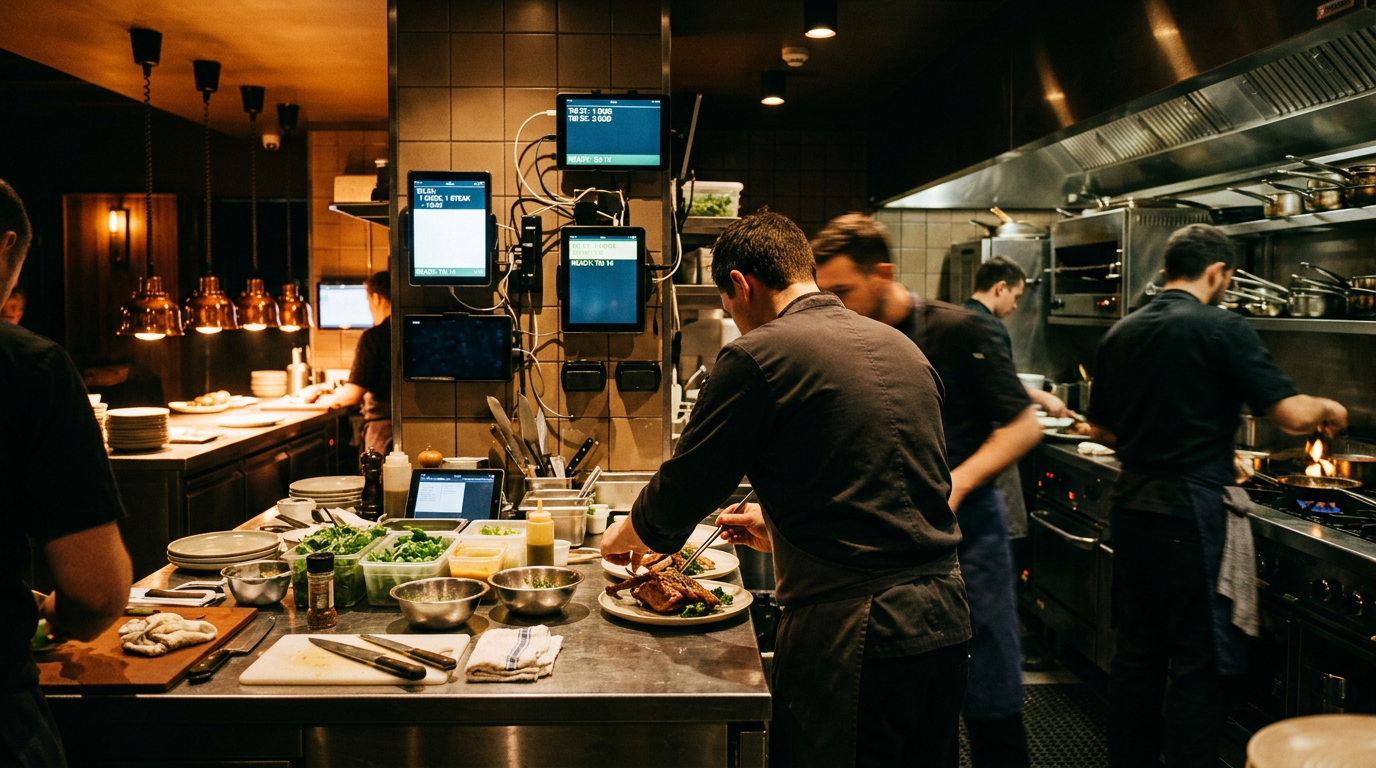
The restaurant industry also runs on hospitality as a product, and hospitality requires people. Nobody's dining experience improves because a robot ran their appetizers from a kitchen window. The technology that improves the guest experience is almost always invisible: faster seating systems, better reservation flow, kitchen communication tools, payment friction reduction. Not staff reduction.
What changes for the operators who engage
I've watched operators who have been skeptical about technology for years start using AI tools in their admin layer. The change I see most often isn't a headcount change. It's an attention change.
The owner who used to spend Sunday evenings catching up on admin now has Sunday evenings free. That might sound minor. In the context of an industry that burns people out at alarming rates, it's not minor at all.
The manager who used to dread scheduling now has more capacity for the floor work they actually got into this business to do.
The operator who used to respond to reviews once a week now maintains a near-real-time response rate. Their average star rating has gone up, not because the food changed, but because unhappy guests feel heard faster.
The practical question
If you're running an independent restaurant or bar right now, the useful question isn't "will AI take my staff's jobs." It's: "What is my team spending time on that doesn't require a human?"
Start there. Make a list. Pick the one item that takes the most time and generates the least value. Find out if there's a tool that handles it.
That's it. You don't need a transformation plan. You need one less thing eating your team's capacity.
The ones who figure this out now will have a real advantage. Not because they're running leaner, but because they're running smarter, with the same people, doing better work.